
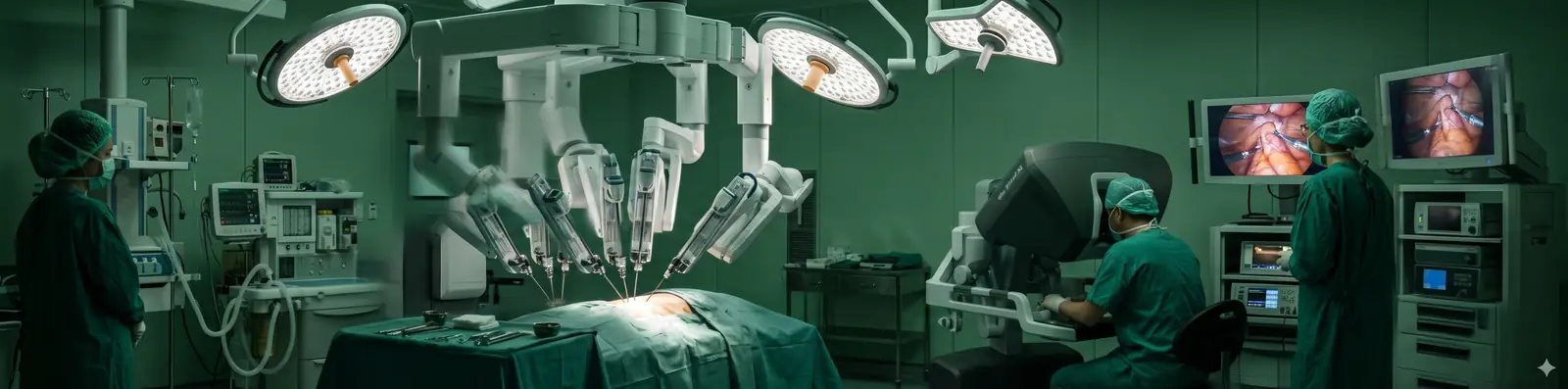
Surgery is the cornerstone of cure for most cancers of the digestive system. The quality of that operation — removing the tumour completely with the right lymph nodes while preserving function — matters greatly for long-term outcomes.
Dr. Jayanth H is fellowship-trained in robotic surgical oncology (Vattikuti Foundation, Narayana Health) and performs major GI and hepato-pancreato-biliary (HPB) cancer operations, including the Whipple procedure, liver resections and robotic colorectal surgery, working with oncologists in a multidisciplinary team.
Conditions & procedures
- Oesophageal (food pipe) cancer
- Stomach (gastric) cancer
- Colon and rectal cancer
- Small intestine and appendix cancers
- Liver cancer and liver metastases
- Pancreatic and periampullary cancer (Whipple / pancreaticoduodenectomy, distal pancreatectomy)
- Gallbladder cancer (radical cholecystectomy) and bile duct cancer (cholangiocarcinoma)
- Peritoneal surface malignancies (cytoreductive surgery / HIPEC, in selected cases)
When should you see a surgeon?
- Unexplained weight loss or loss of appetite
- Difficulty swallowing or food sticking
- Blood in stools, black stools or a change in bowel habit
- Persistent abdominal pain, fullness or a lump
- Jaundice (yellow eyes / skin), itching, pale stools
- Anaemia found on a blood test without a clear cause
How Dr. Jayanth H treats it
Every case is planned with scans, endoscopy and biopsy, and discussed with medical and radiation oncologists so that chemotherapy or radiotherapy is given at the right time. Wherever safe, surgery is performed robotically or laparoscopically — magnified 3D vision and precise instruments help with fine dissection, often with less blood loss, less pain and a faster recovery.
Recovery
Recovery depends on the operation — from a few days after colorectal surgery to around a week or more after major pancreatic or liver surgery. An enhanced-recovery protocol (early walking, early feeding, good pain control) is followed, and follow-up continues with the oncology team.
Frequently asked questions
Is robotic surgery safe for cancer?
Yes, in suitable patients robotic surgery follows the same cancer principles as open surgery — complete tumour removal with adequate margins and lymph nodes — while offering smaller incisions and faster recovery.
What is the Whipple procedure?
The Whipple procedure (pancreaticoduodenectomy) removes the head of the pancreas, part of the small intestine, the bile duct and gallbladder, and then reconnects the digestive tract. It is the main curative operation for tumours in the head of the pancreas and periampullary region.
Can I get a second opinion on a cancer surgery plan?
Yes. Bring your scans, biopsy and endoscopy reports to a consultation at Fortis Bannerghatta Road, Gleneagles BGS Kengeri or The Gut Care, JP Nagar.
This page is general information to help you understand your options and is not a substitute for a consultation. Treatment is always individualised after examination and investigations.