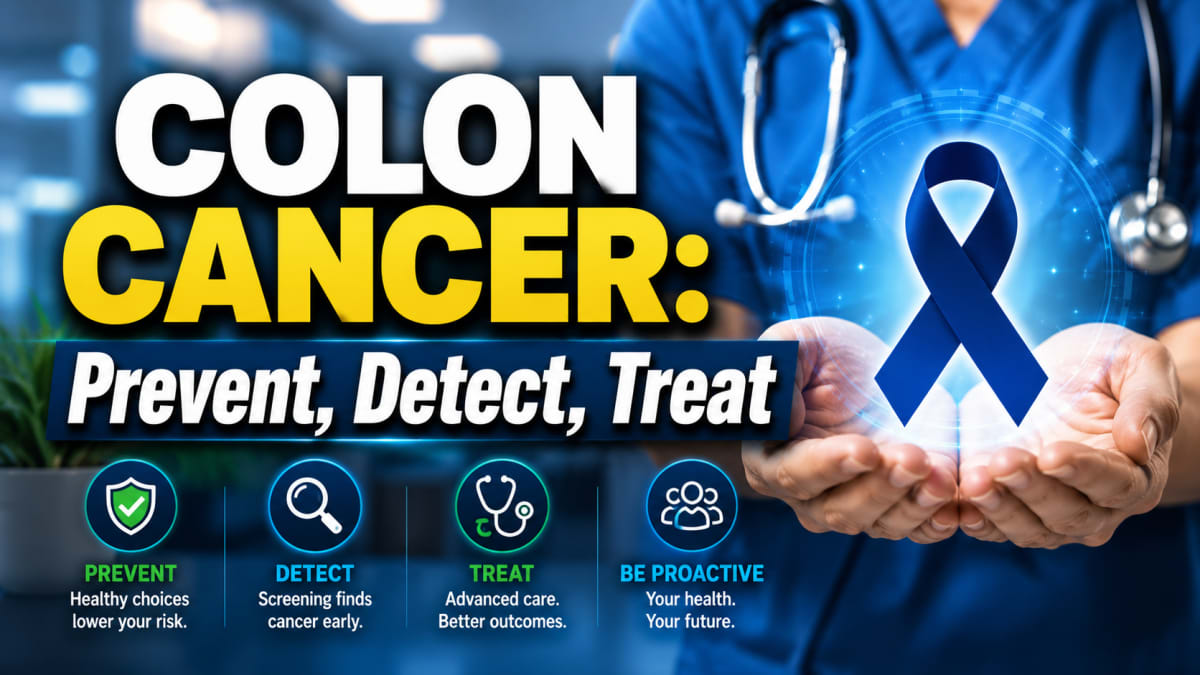
Hearing the word "cancer" is always frightening. But when it comes to colon (colorectal) cancer, there is a powerful message of hope: it is one of the most preventable and treatable forms of cancer if it is caught early.
Despite this, it remains a leading cause of cancer-related deaths simply because people delay or avoid their routine screenings. As a surgical gastroenterologist, my goal is not just to treat disease, but to help you prevent it. Here is what every adult needs to know about protecting their colon health.
Why Screening is Your Best Defense
Most colon cancers start as small, non-cancerous growths called polyps on the inner lining of the colon or rectum. Over time—often many years—some of these polyps can turn into cancer.
The magic of screening is that we can actually find and remove these polyps before they ever turn into cancer.
Because colon cancer rates have been rising in younger adults, the medical guidelines have recently changed. If you are at average risk, you should begin regular colorectal cancer screening at age 45 (not 50, as was previously recommended). If you have a family history of the disease, your doctor might recommend starting even earlier.
Screening Options: It's Not Just Colonoscopies
A colonoscopy remains the "gold standard" because it allows doctors to look inside the entire colon and remove polyps on the spot. However, the best screening test is the one that actually gets done! If you are hesitant about a colonoscopy, there are other highly effective, non-invasive options available today:
- At-home stool tests (like FIT or Cologuard): These check for hidden blood or altered DNA in your stool. They are simple, private, and done in your own bathroom.
- New blood tests: Recent advancements have even introduced blood tests that can check for cancer markers, offering another alternative for those who refuse other methods.
If an at-home test comes back positive, a follow-up colonoscopy will be required, but these tests are a fantastic first step for average-risk patients.
The Silent Symptoms to Watch For
In its early stages, colon cancer often has zero symptoms. That is why screening at age 45 is non-negotiable. However, if you experience any of the following warning signs at any age, do not ignore them:
- A persistent change in your bowel habits (diarrhea, constipation, or feeling like your bowel doesn't empty completely).
- Blood in your stool or rectal bleeding.
- Unexplained abdominal pain, cramping, or gas pain.
- Weakness, fatigue, or unexplained weight loss.
- Low iron levels (anemia) found on a routine blood test.
Advanced Surgical Treatments
If cancer is detected, the treatment landscape is better than ever. For early-stage colon cancer, surgery is often the primary and most effective treatment.
Today, we rarely have to rely on traditional "open" surgery with large incisions. Thanks to robotic-assisted surgery, we can remove the cancerous portion of the colon with incredible precision. For the patient, this advanced approach means:
- Much smaller incisions and less scarring.
- Significantly less pain after the operation.
- A faster return to normal bowel function and diet.
- A shorter hospital stay and quicker return to your daily life.
Take Control of Your Health
Colon cancer prevention is in your hands. Talk to your primary care doctor about which screening method is right for you. It is a simple step that could quite literally save your life.
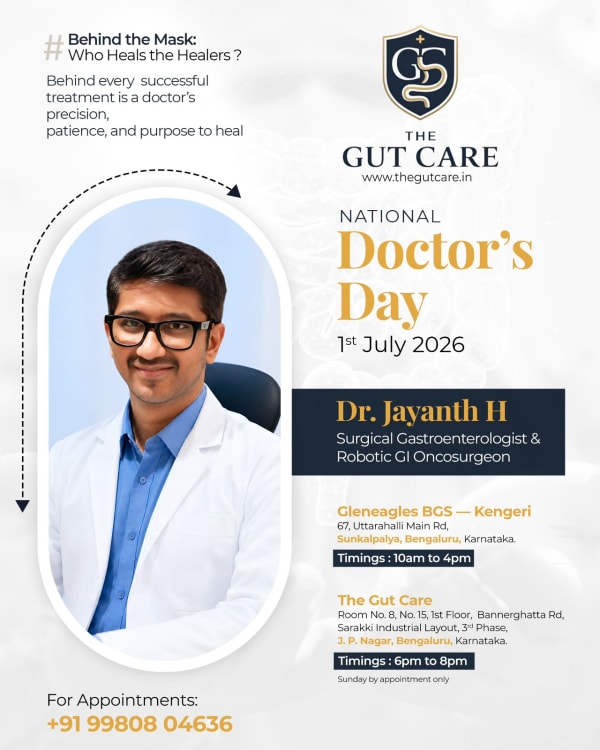
Have you been diagnosed with colon cancer or complex polyps that require removal? Consult with Dr. Jayanth H to discuss advanced, minimally invasive surgical options tailored to your specific case.
Dr. Jayanth H
Surgical Gastroenterologist & Robotic GI Oncosurgeon — MBBS, MS (General Surgery), DrNB (Surgical Gastroenterology), Vattikuti Fellowship in Robotic Surgical Oncology · Bengaluru
Found this helpful? Share it: