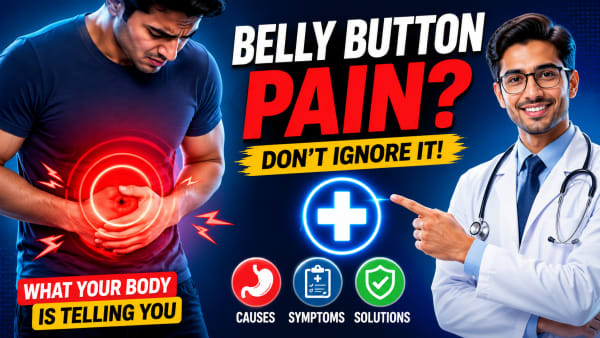
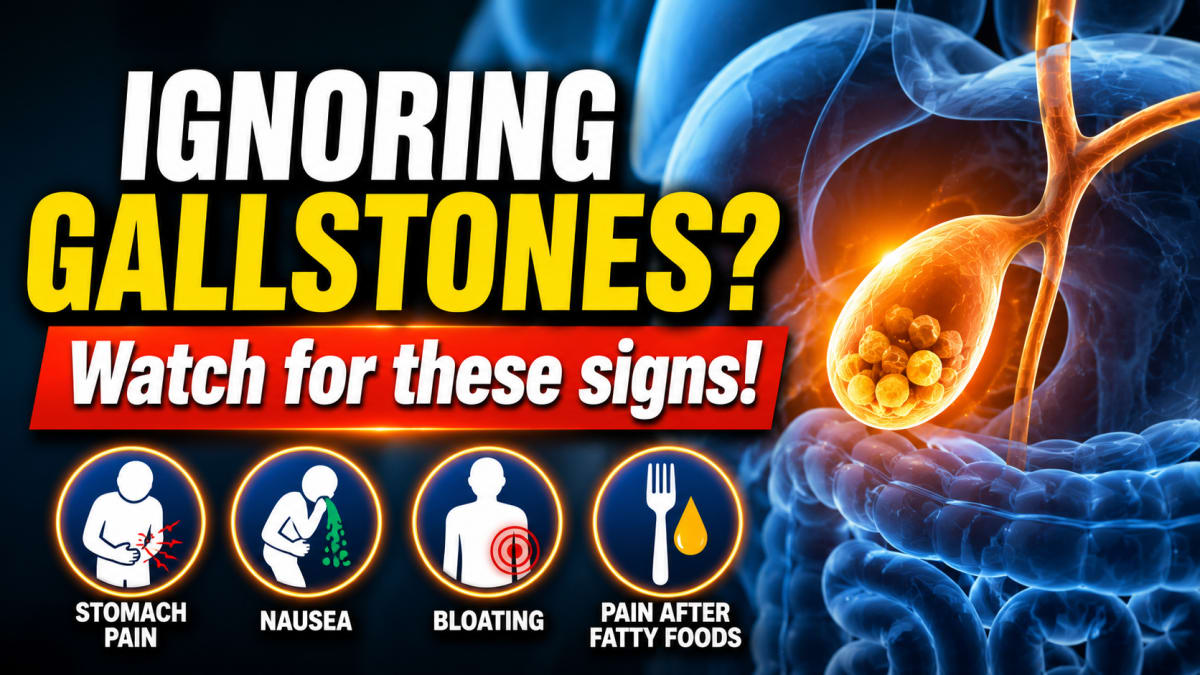
Many people have gallstones and don't even know it. They can sit silently in your body for years without causing a single problem. But when a gallstone finally decides to move, it can cause some of the most intense sudden pain you will ever experience.
Because gallbladder attacks often happen late at night or right after a heavy meal, people frequently mistake them for bad indigestion or even a heart attack. Knowing the early warning signs can save you from a late-night trip to the emergency room.
What Exactly Are Gallstones?
Your gallbladder is a small, pear-shaped organ tucked under your liver on the right side of your belly. Its main job is to store bile—a fluid that helps your body digest fats.
Sometimes, the substances that make up this fluid (mostly cholesterol) can harden into solid pieces. These are gallstones. They can be as tiny as a grain of sand or as large as a golf ball. As long as they stay quietly inside the gallbladder, you usually won't feel them. The trouble begins when a stone gets pushed out and blocks the narrow tubes (ducts) that let the bile flow out.
The Warning Signs You Shouldn't Ignore
When a gallstone blocks a duct, it causes pressure to build up rapidly. This leads to a "gallbladder attack." Here are the classic signs that you might be dealing with gallstones:
- Sudden Pain in the Upper Right Belly: This is the most common symptom. The pain usually starts suddenly in the upper right side of your stomach, just under your ribs.
- Pain After Eating: Gallbladder pain often strikes after eating a heavy, greasy, or fatty meal (like pizza, fried food, or cheese). Your body tries to squeeze out bile to digest the fat, pushing the stone into the duct.
- Pain that Spreads: The pain might radiate to your right shoulder or directly into the center of your back between your shoulder blades.
- Nausea and Vomiting: The intense pain is often accompanied by feeling sick to your stomach or throwing up.
- Fever or Yellowing Skin: If you have a fever, chills, or notice your skin or the whites of your eyes turning yellow (jaundice), seek medical help immediately. This means a stone has caused a serious blockage or infection.
The Risk of Waiting
It can be tempting to ignore a gallbladder attack if the pain eventually goes away. However, once you have one attack, you are very likely to have more. Ignoring the problem can lead to severe complications, including:
- Dangerous infections in the gallbladder.
- Damage to your liver or pancreas.
- Emergency surgery, which carries a longer recovery time than a planned procedure.
The Solution: A Safe, Routine Procedure
If gallstones are causing you pain, the most effective treatment is to remove the gallbladder entirely. The good news is that you can live a perfectly normal, healthy life without a gallbladder! Your liver will simply send the bile directly into your digestive system instead of storing it first.
Today, gallbladder removal (called a cholecystectomy) is one of the most common and safest surgeries performed.
Most of the time, it is done laparoscopically. This means the surgeon makes a few tiny, keyhole incisions rather than one large cut. Because it is minimally invasive, most patients:
- Experience very little pain.
- Go home the exact same day.
- Return to work and normal activities within just a week or two.
Don't Wait for an Emergency
If you keep experiencing upper belly pain, especially after meals, don't write it off as just bad heartburn or a stomach bug. Getting checked early gives you the power to schedule a simple, routine surgery on your own time, rather than rushing to the ER in agony.
Are you experiencing symptoms of gallstones? Don't wait for the pain to get worse. Book a consultation with Dr. Jayanth H to discuss a safe, minimally invasive solution today.
Dr. Jayanth H
Surgical Gastroenterologist & Robotic GI Oncosurgeon — MBBS, MS (General Surgery), DrNB (Surgical Gastroenterology), Vattikuti Fellowship in Robotic Surgical Oncology · Bengaluru
Found this helpful? Share it: