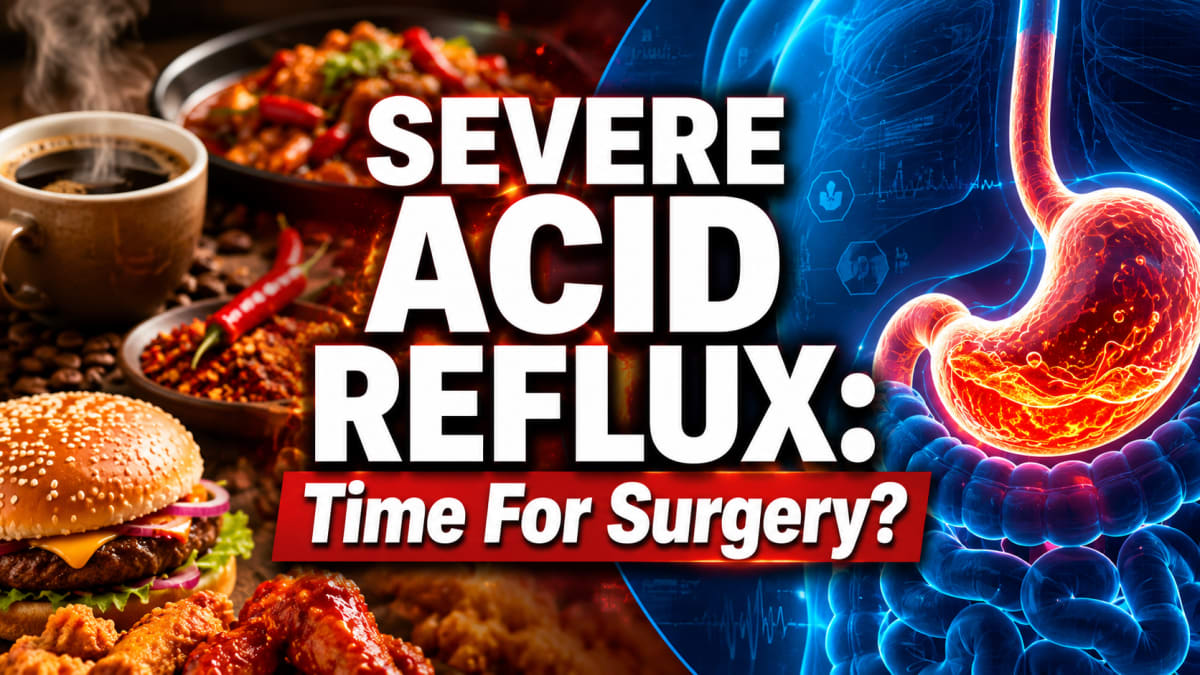
We’ve all experienced it: that uncomfortable, burning sensation in the chest after eating a heavy or spicy meal. Occasional heartburn is normal. However, if you are reaching for antacids several times a week and that burning feeling is disrupting your sleep or daily life, you might be dealing with Gastroesophageal Reflux Disease (GERD).
For many, GERD is a lifelong nuisance managed by pills. But for others, medications simply stop working. So, when is it time to stop relying on medication and start considering a surgical solution?
Recognizing Severe GERD Symptoms
GERD happens when the valve between your esophagus (the food pipe) and your stomach becomes weak or relaxes when it shouldn't. This allows stomach acid to flow backward, irritating the lining of your esophagus.
While heartburn is the most common symptom, severe GERD can cause other issues you shouldn't ignore:
- Frequent regurgitation: A sour or bitter-tasting acid backing up into your throat or mouth.
- Difficulty swallowing: A feeling like food is stuck in your chest.
- Chronic dry cough: Especially noticeable at night or right after waking up.
- Hoarseness or a sore throat: Caused by acid irritating your vocal cords.
The First Steps: Lifestyle and Medications
Before considering surgery, your doctor will usually recommend trying to manage GERD with lifestyle changes and medications. This is the first line of defense and works for many people.
Common lifestyle tweaks include:
- Avoiding trigger foods (like caffeine, alcohol, spicy foods, and citrus).
- Eating smaller meals and not eating within three hours of bedtime.
- Elevating the head of your bed.
- Losing excess weight.
When lifestyle changes aren't enough, doctors often prescribe medications like PPIs (Proton Pump Inhibitors) to reduce the amount of acid your stomach makes.
When Are Medications Not Enough?
Medications can be highly effective, but they don't fix the underlying mechanical problem: the weak valve. You might want to consider surgery if:
- Medications aren't providing relief: You still have severe symptoms despite taking prescription-strength antacids.
- You don't want to take pills forever: Some patients prefer a permanent fix rather than taking daily medication for the rest of their lives, especially given concerns about the long-term side effects of certain antacids.
- You have regurgitation: Medications reduce acid, but they don't always stop the physical backflow of fluid into your throat.
- You are developing complications: Long-term acid exposure can lead to esophagitis (inflammation), strictures (narrowing of the esophagus), or a precancerous condition called Barrett’s esophagus.
Exploring Surgical Options
The good news is that surgery for GERD is highly effective and much less invasive than it used to be. The most common procedure is called a Fundoplication.
How it works:
Think of it like reinforcing a weak door hinge. The surgeon wraps the very top part of your stomach around the lower part of your esophagus. This recreates a strong valve, stopping acid from washing back up.
Today, this procedure is almost always done using minimally invasive techniques, including traditional laparoscopy or robotic-assisted surgery. This means:
- Only a few tiny incisions are needed.
- You will experience much less pain than with open surgery.
- Most patients go home within 24 to 48 hours and recover quickly.
Taking the Next Step
Living with chronic acid reflux can be exhausting, but you don't have to suffer in silence or rely entirely on pills if they aren't working. If your GERD is controlling what you eat, how you sleep, and how you live, it might be time to look at all your options.
If you are struggling with severe acid reflux and want to explore if minimally invasive surgery is right for you, schedule a consultation with Dr. Jayanth H to discuss your personalized treatment plan.
Dr. Jayanth H
Surgical Gastroenterologist & Robotic GI Oncosurgeon — MBBS, MS (General Surgery), DrNB (Surgical Gastroenterology), Vattikuti Fellowship in Robotic Surgical Oncology · Bengaluru
Found this helpful? Share it: